
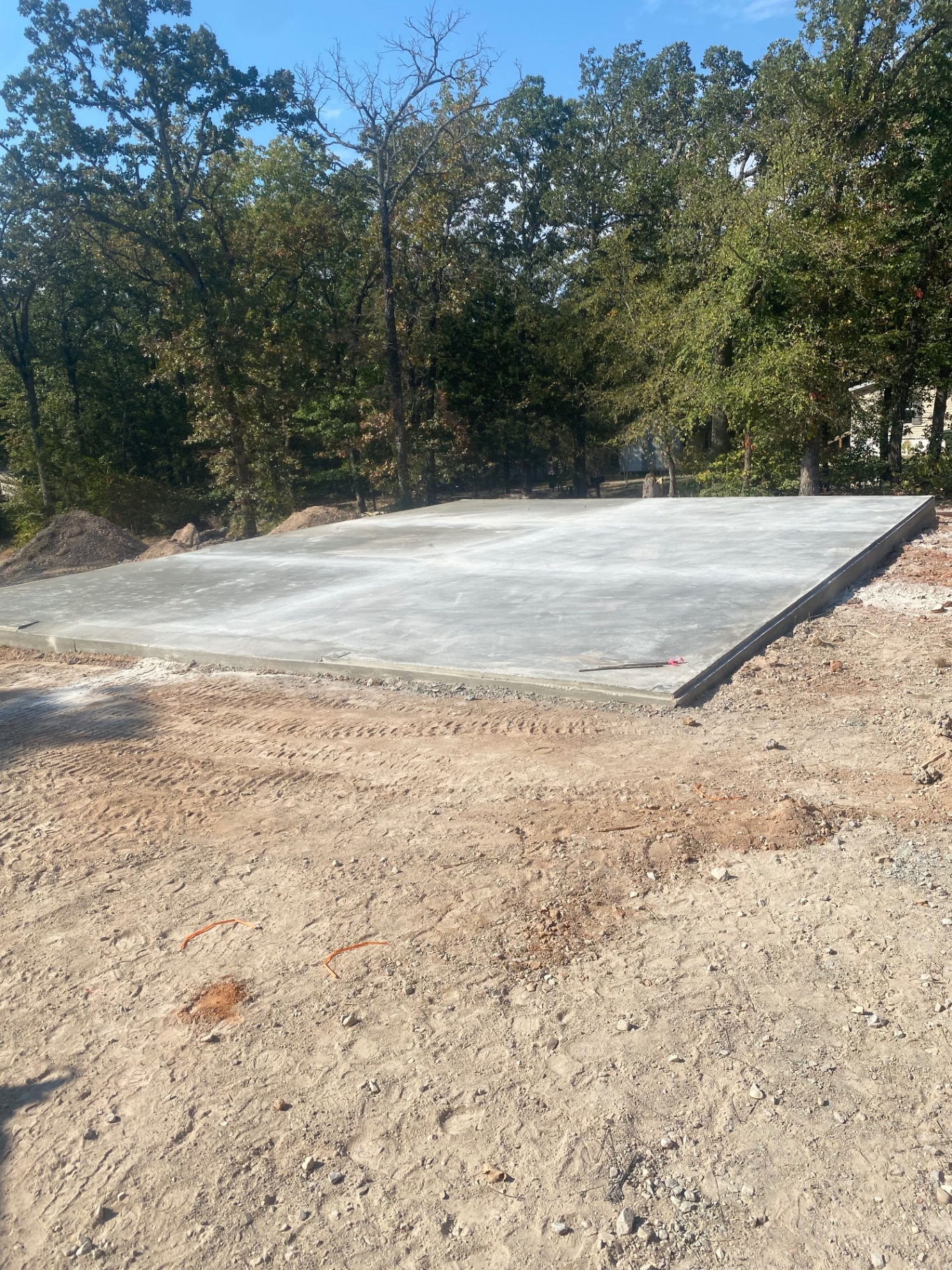
Why Concrete Cracks (and How to Make Sure It Cracks Where You Want)
Any contractor who promises your concrete won't crack is either lying or has never poured a slab. Concrete shrinks as it cures and moves with temperature. It will crack. The job of a good pour is to control where.
Control joints
Those clean straight lines you see cut into a driveway every 8–12 feet are not decorative. They're a weak spot we cut into the slab on purpose so when the concrete cracks, it cracks down inside that joint where you can't see it.
Joint depth and spacing matter
Joints have to be cut 1/4 the depth of the slab. Spacing has to match the slab thickness — typically 2–3 times the slab thickness in feet. Skip either rule and the slab cracks somewhere else.
When to worry
Hairline cracks along joints or a couple of fine cracks across a slab in the first year — normal. Wide cracks (1/4" or more), cracks with vertical displacement, or cracks running across a whole slab — that's a base or pour problem and you should call the contractor back.
Up next